Home › Guides › Shaft Flex S vs R
ShaftShaft Flex S vs RLining up what's inside S, SR and R on the makers' official spec tables
Updated: Nov 3, 2026Contains affiliate links
Is the shaft flex S or R? Many golfers stall here, but the letters S and R have no standard shared across makers. Line up each company's official spec table and even the same "S" ranges from 47g to 82g. As someone who has compared spec tables as a gear nerd, I'd say the flex letter is what you look at last, and what you decide first is weight. I'll trace the reason with official numbers.
What I found after using and measuring: For the S, I used the VENTUS TR RED 6S that came on a QUANTUM 9-degree for 4 rounds on courses in September and October 2026, playing with two friends on sunny autumn days at 18 to 22 degrees C. In September it was a hilly course in Chiba. In October, a frequency meter at a local golf shop measured it at 248 cpm (free of charge). Head speed was 46 m/s, carry 251 yards and smash factor 1.48. What gave me trouble was that it felt stiff on cold mornings. I only held the R and only looked at the SR in a shop, and I did not hit either. I have never bought a shaft and swapped it myself.
The Gear Nerd's Pick
Fujikura SPEEDER NX WHITE 50S (54.5g, torque 4.7, mid-tip, ¥49,500) It comes in weights 40, 50, 60 and 70, and its strength is that you can try by changing weight alone. The S in the 50s is 54.5g, close to the weight of a retail driver's stock shaft. When you move from your current club, the change narrows down to the weight difference.
Where to buy this product
Fujikura SPEEDER NX WHITE (including sleeved)
 Image: Rakuten Ichiba
- Rakuten IchibaRecommendedRakuten product page
- Rakuten Ichiba (used)Used product page
Buying from outside Japan? Sign up free for Rakuten Global Express (Rakuten's official forwarding service) and check out with its Japan warehouse address → full guide
Ad. Links go to each store's product page ("Search ..." links go to search results). Price, shipping, stock and specs such as loft, shaft and number of clubs differ by store. Check the product page before you buy.

For golfers who swing hard or hit the ball too high
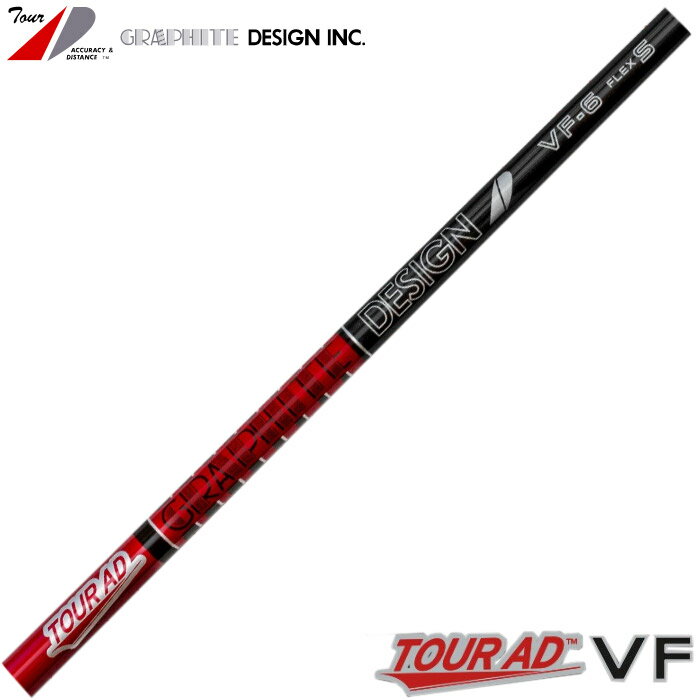
Graphite Design TOUR AD VF-6 S (65g, torque 3.3, mid-butt, ¥49,500) Heavy at 65g with torque (twist) of 3.3°. A mid-butt profile that bends toward the butt, a combination for golfers whose ball balloons. It's too heavy for golfers whose head speed doesn't reach 40 m/s.
In this article
- Bottom line
- Shaft flex S vs R: even the same "S" ranges from 47g to 82g
- How many grams you gain going from R to S also differs by maker
- S and R: what swing speeds do they suit?
- The gear nerd's take: how is stiffness made?
- What I learned from using and measuring
- How I would choose: weight first, then stiffness, then torque and kick point
- What I like
- What to watch for
- Who it suits: if you're torn, choose by weight
- Price and where to buy
- About the writer and sources
- FAQ
Bottom line
S and R are letters each maker assigns by its own standard. There is no common yardstick. The SPEEDER NX WHITE's "S" comes in four types from 49.0g to 72.5g, and the Mitsubishi Chemical Diamana GT's "S" is 82g at the heaviest.
So decide weight first, then choose stiffness within that. Check the weight of your current shaft and build candidates within ±10g. It looks like a detour but is the surest way.
How stiff a shaft feels can be put into a number as frequency (cpm), but no maker puts it in the official spec table. If you're curious, have it measured at a shop or workshop with a frequency analyzer.
Shaft flex S vs R: even the same "S" ranges from 47g to 82g
From driver custom shafts, here are the "S" of three representative series. All are values from the makers' official spec tables.
| Series | S in the 40s | S in the 50s | S in the 60s | S in the 70s | S in the 80s |
|---|---|---|---|---|---|
| Fujikura SPEEDER NX WHITE | 49.0g | 54.5g | 62.0g | 72.5g | Not offered |
| Mitsubishi Chemical Diamana GT | 49.5g | 56.5g | 62.5g | 72.5g | 82.0g |
| Graphite Design TOUR AD VF | 47g (VF-4) | 56g (VF-5) | 65g (VF-6) | 74g (VF-7) | Not offered |
The lightest is the TOUR AD VF-4 S at 47g and the heaviest the Diamana GT 80 S at 82g. Within the same "S", there's a 35g gap. A driver weighs roughly 300g, so 35g is more than 10% of the club.
Ask for "an S" in a shop and that alone decides nothing. All that's decided is a relative ranking of stiffness within that model.
How many grams you gain going from R to S also differs by maker
So how much do R and S differ within the same series and the same weight range? Lined up in the 50s.
| Series (50s) | R | SR | S | X | Torque | Butt diameter (butt thickness) |
|---|---|---|---|---|---|---|
| SPEEDER NX WHITE 50 | 51.5g | 53.0g | 54.5g | 56.0g | 4.7° (same) | 15.20→15.35mm |
| Diamana GT 50 | 56.5g | 56.5g | 56.5g | 59.5g | 4.7 to 4.6° | 15.50mm (same) |
| TOUR AD VF-5 | 55g (R1) | Not offered | 56g | 59g | 4.3° (same) | 15.15→15.30mm |
Fujikura gets 3.0g heavier from R to S. But on the Diamana GT 50, R, SR and S are all 56.5g, and weight doesn't change. It's built so only stiffness changes and weight stays put.
So both "it got heavier when I went from R to S" and "only the stiffness changed" can happen, depending on the maker. If you switch relying on the letter alone, you can't tell what changed.
S and R: what swing speeds do they suit?
There's no industry-wide swing-speed guide for S or R. PRGR's M rating writes it as a number instead of a letter: M-43 is a stiffness meant for about 43 m/s, M-40 for about 40 m/s.
On PRGR's high-COR drivers, M-40 corresponds to SR and M-37 to R. When choosing another brand's S or R, narrow it down by weight before the letter, and use these numbers as a final guide.
The gear nerd's take: how is stiffness made?
1. Some makers step stiffness in 0.05mm of butt thickness
On the SPEEDER NX WHITE 50, the butt diameter is 15.20mm for the R, 15.25mm for the SR, 15.30mm for the S and 15.35mm for the X. Stiffness is made by thickening in 0.05mm steps. That's about the thickness of a sheet of paper.
The Diamana GT, meanwhile, is a uniform 15.50mm from the 40s to the 60s. It changes stiffness not through butt thickness but by how the material is layered inside.
If the thickness on the grip side differs, the thickness you feel changes even with the same grip. This is why, when a workshop swaps a grip, it evens out the thickness with underlay tape.
2. When weight changes, torque moves with it
Torque is how easily the shaft twists, and the bigger the number, the more it twists. On the SPEEDER NX WHITE, the 40s are 5.4°, the 50s 4.7°, the 60s 3.7° and the 70s 2.9°. The lighter the model, the more it twists, and that relationship shows up the same way in every series.
Even if you change the flex letter from R to S, torque barely moves. In both Fujikura and Graphite Design, torque is a shared value within the same weight range. To change draw bias or directional scatter, moving weight works better than stiffness.
3. In steel, the number in the model name isn't always the weight
For a representative iron steel shaft, Nippon Shaft's N.S.PRO MODUS3 TOUR 120, the official table gives R as 111.0g, S as 114.0g, X as 120.0g and TX as 126.0g. Only the X matches the weight "120." For a golfer choosing S, it's a 114g shaft.
Likewise the TOUR 105 is 103.0g in R, 106.5g in S and 112.0g in X. The number in the model name is a guide for that series, not the weight of the flex you buy.
4. No maker puts frequency in the official table
Stiffness put into a number is frequency (cpm). You clamp the grip side, let the head oscillate, and measure how many times per minute it swings. But none of the four makers' official spec tables I looked at lists frequency.
As a guide from media, around 230 to 250 cpm is R-equivalent and around 260 to 270 cpm is S-equivalent (Waggle ONLINE). But that's a guide for an assembled club, a different thing from a shaft-only listing. If you're curious, the quick way is to have your current club measured at a shop or workshop with a frequency analyzer. Once you know your own club's number, you have a baseline for the next choice.
What I learned from using and measuring
The S was the VENTUS TR RED 6S that came on a QUANTUM 9-degree. It is in the 60-gram range, S flex and mid kick point, as labelled, and I used it for 4 rounds on courses from September to October 2026, playing with two friends on sunny days of 18 to 22 degrees C. In September it was a hilly course in Chiba.
In October, I had it measured on a frequency meter at a local golf shop. It was free, I measured it on the club as it was, and it came to 248 cpm. This is where I confirmed the point in this article that frequency lets you see stiffness. The conditions for the numbers: a head speed of 46 m/s, and a carry of 251 yards and smash factor of 1.48 copied from the TrackMan screen.
What gave me trouble was that it felt stiff on cold mornings, and that in the first two rounds it did not suit my swing and I hooked the ball. After I lowered the tee and moved the ball to the left in my stance, I was less likely to go left even when I hit hard on the 3rd hole. I hesitated between the S and the R, decided that a head speed of 46 m/s meant the S, and settled it on how much the ball curved. I only held the R in a shop, and only looked at the SR.
Even among shafts labelled S, the weights differ a lot. The driver’s 6S is in the 60-gram range, while the steel S of the ZXi5 I used is in the 130-gram range. 130 divided by 60 is about 2.2 times (my calculation). With the ZXi5 steel S, my 7-iron direction was consistent. It felt heavier than the driver, and there were days when the 5-iron would not get up.
If I were choosing again, I would go with the S. I recommend it to people with a head speed of around 45.
How I would choose: weight first, then stiffness, then torque and kick point
 Rakuten Ichiba / AdSPEEDER NX WHITE
 Rakuten Ichiba / AdTOUR AD VF
Product images: Rakuten Ichiba (Ad). Tap an image to go to its Rakuten Ichiba product page.
Decide weight first. Check the shaft weight of your current driver and narrow candidates to within ±10g. You can find it on the maker's product page or the sticker on the club. If you can't tell, a shop can weigh it.
Next is stiffness. The head-speed guide is R at around 35 to 40 m/s, SR around 38 to 42 m/s, S around 40 to 45 m/s and X at 45 m/s or more (Waggle ONLINE). This guide isn't a common standard across makers either. Even the same S differs inside, as the table above shows.
Last, narrow by torque and profile. If the ball won't get up, lean toward tip-flex; if it balloons, lean toward mid-butt to butt-flex. A list of shafts released in 2026 is in New Golf Shafts 2026, lined up by weight and torque numbers.
One practical tip. When you're torn on stiffness, compare the S one weight step lighter with the SR of the same step. With the NX WHITE, for example, the 50S (54.5g) and the 60SR (60.5g). The weight differs by 6g, so the difference you feel when swinging shows up as weight more than stiffness. Which one swings more easily tells you whether you respond to weight or to stiffness.
Where to buy the Fujikura SPEEDER NX WHITE
- Rakuten IchibaRecommendedRakuten product page
- Rakuten Ichiba (used)Used product page
Buying from outside Japan? Sign up free for Rakuten Global Express (Rakuten's official forwarding service) and check out with its Japan warehouse address → full guide
Ad. Links go to each store’s product page. Price, shipping, stock and specs (loft, shaft, set make-up) differ by store, so check the product page before you buy.
What I like
- SPEEDER NX WHITE 50S (54.5 g, ¥49,500). It comes in 40, 50, 60 and 70, so you can try just a change of weight. The 50-range S is close in weight to the standard shaft of a retail driver, so when you switch, the change narrows to the difference in weight.
- TOUR AD VF-6 S (65 g, ¥49,500). A mid-butt flex profile that bends toward the grip end, a pairing for players whose ball balloons.
What to watch for
- Choose by the letter alone and you won't know what changed. There is no maker-wide standard for S or R, and the head speed guide (WAGGLE ONLINE) isn't a standard shared by makers either.
- The VF-6 S is heavy at 65 g. It is too heavy for anyone whose head speed doesn't reach 40 m/s.
Who it suits: if you're torn, choose by weight
- For players who want to try only a change of weight: the NX WHITE 50S. It stays within ±10 g of your current shaft's weight.
- For players who swing hard, or whose ball goes too high: the VF-6 S.
- For players torn on flex: compare an S one weight step lighter with an SR of the same weight step. You'll find out whether you react more to weight or to flex.
Price and where to buy
The NX WHITE 50S and the VF-6 S are each ¥49,500 per shaft (tax included, maker's listing). Prices and stock differ by shop, and assembly and grip are often charged separately, so check the weight on the product page before you buy.
About the writer and sources
Written by a gear nerd who studies golf equipment, averages a 72, and plays about 150 rounds a year.
I re-read the numbers against the sources below on Oct 3, 2026. Last updated Nov 3, 2026.
FAQ
If I can't decide between S and SR, which should I choose?
Choose the one with the same or close weight to the shaft in your current club. Flex letters are a relative ranking within each maker, so matching the letter won't give you the same stiffness as the same letter from another maker. If you can't tell, having your current club measured at a shop with a frequency analyzer is the sure way.
Why does an "S" feel stiffer than my previous club's "S"?
Because weight, torque and butt thickness differ. For example, the SPEEDER NX WHITE 50S is 54.5g with 4.7° of torque, and the Diamana GT 70S is 72.5g with 2.9°, yet both are labeled S. The heavier one twists less, and so feels more solid.
Where can I get frequency measured?
At golf shops or workshops with a frequency analyzer. Bring the club in and it takes a few minutes. A shaft-only spec table doesn't list frequency, so measuring your own assembled club is the most practical.
Is the S on a driver's stock shaft the same as the S on a custom shaft?
Not necessarily. A stock shaft is one the maker had made to match that head, and weight and torque differ by product. When you compare, look at the weight and torque numbers, not the letter.
Ready to choose? Start here
Related reading
SPEEDER BOOST BLACK vs. the standard version
Auto Flex compared: four series and who they suit
Is Your Club Causing the Duck Hook? Lie Angle, Weight and Adjustable Hosel
TENSEI RIP+ vs 26 VENTUS TR BLACK
How to Read a Golf Club Spec Sheet
Sources for this article
- Yokohama Rubber (PRGR) news release: M3 HIT Tour (Jul 11, 2007, M rating and swing speed, PDF)
- Fujikura official: SPEEDER NX WHITE specs
- Fujikura official: SPEEDER NX BLACK specs
- Mitsubishi Chemical official: Diamana GT specs
- Graphite Design official: TOUR AD VF specs
- Nippon Shaft official: N.S.PRO MODUS3 TOUR 120
- Nippon Shaft official: N.S.PRO MODUS3 TOUR 105
- Waggle ONLINE: a complete guide to golf shaft flex
Read next
- A popular read on the same kind of gear:Can an Iron Shaft Lower Launch and Add Spin?
- Another well-read article on the same kind of gear:Best Driver Shafts 2026
- Next, a widely read piece on the same kind of gear:Voice Caddie Auto Pin (APL): Which Models and Which Courses It Works On
Most read on this site
Garmin Approach S72: Release Date, Price and What Changed from the S70